Every project starts with one question: what’s holding this building up?
For more and more contractors, developers, and engineers, the answer is structural steel construction. It’s the material that meets the pressures shaping modern construction—tighter schedules, larger spans, higher loads, and greater expectations for long-term performance.
As construction projects get larger, tighter, and more complex, the materials behind them need to carry the entire performance of the jobsite.
Demand reflects that shift. According to recent market research, the North American structural steel fabrication market reached an estimated $47.32 billion in 2025 and is projected to grow toward $55.77 billion by 2030. That’s a clear signal that more construction industry builders are moving toward stronger, long-lasting, and high-precision steel components.
In this article, we’ll break down why structural steel has become the backbone of modern construction and how it compares to traditional options like wood and concrete. Here’s what you’ll learn:
- The five biggest advantages structural steel fabrication offers today’s builders
- How steel stacks up against non structural steel products like wood and concrete in real-world applications
- The types of projects that benefit most from using structural steel
- Why fabrication quality matters just as much as the material itself
- What sets Puri-T Welding & Fabrication apart as a steel partner
Advantage #1: Superior Strength-to-Weight Ratio for Structural Steel Grades

Structural steel stands out for one core reason: it carries more load with less material. Compared to wood or concrete, steel delivers a far higher strength-to-weight ratio. This allows builders to span longer distances, reduce bulk, and support heavier equipment and structural demands without overbuilding.
This matters on real jobsites. Lighter framing members mean fewer foundation requirements, easier handling during installation, and more flexibility when designing open interiors.
Long-span roofs, clear-floor warehouses, mezzanines, multi-story frames: These applications depend on strength without unnecessary weight. Structural steel makes that possible.
For architects and engineers, this ratio opens the door to creative layouts and efficient steel structures. For contractors, it keeps projects moving with predictable performance and fewer surprises once loads are applied.
Advantage #2: Long-Term Durability & Reliability
Longevity is one of the biggest reasons structural steel outperforms traditional construction materials. It doesn’t warp, rot, crack, or attract pests, which are issues that routinely shorten the lifespan of wood and add cost to maintenance budgets. Proper coatings or galvanization help structural steel hold up against moisture, corrosion, and harsh weather conditions.
For facilities exposed to temperature swings, humidity, or heavy daily use, this durability becomes a long-term advantage. Steel members remain stable over time, maintaining their shape and load capacity without the deterioration that can compromise other framing materials.
This reliability also reduces repairs and lifecycle costs. Instead of replacing compromised sections or addressing structural movement years down the line, owners get a material built to stay consistent for decades.
Fewer failures, fewer disruptions, and fewer unexpected expenses. Durability is value.
Advantage #3: Design Flexibility & Adaptability

Structural steel gives designers and builders freedom that traditional materials can’t match. Because it can be cut, shaped, and welded into precise configurations, steel supports complex layouts, long open spans, and custom architectural features without adding unnecessary bulk.
This flexibility matters when projects evolve. Need to add a mezzanine? Expand a production area? Reconfigure a floor plan? Structural steel adapts with minimal disruption.
Modifications are often straightforward because the material is predictable, strong, and easy to integrate into existing framing.
For builders, this means fewer limitations during planning and more options when owners request changes mid-project. For architects and engineers, it opens the door to cleaner lines, wider interiors, and structural solutions that aren’t feasible with wood or concrete.
Steel keeps projects adaptable from day one through decades of use.
Advantage #4: Faster Construction Timelines
Time is one of the most expensive variables on any jobsite, and structural steel helps shorten it. Much of the work happens off-site through prefabrication, where steel beams, columns, and components are cut and welded in controlled conditions.
By the time they arrive on-site, they’re ready for installation. This reduces weather delays, minimizes rework, and keeps crews moving.
There’s no curing period like concrete, and no extensive on-site shaping like wood. Bolted or welded connections allow steel frames to go up quickly and cleanly, even on tight schedules or complex builds.
Structural steel keeps schedules steady and projects on track. For owners, faster timelines mean earlier occupancy and fewer labor hours. For contractors, it means predictable progress and fewer bottlenecks as trades cycle through the project.
Advantage #5: Cost Efficiency Over the Steel Building’s Lifetime
Structural steel keeps delivering value long after the project wraps. Because it resists rot, pests, cracking, and moisture-related damage, steel requires far fewer repairs and far less ongoing maintenance than traditional materials.
Those reductions add up. Owners spend less on structural upkeep, and facilities stay operational without costly interruptions. Steel’s stability also helps maintain building performance, which supports energy efficiency and lowers operating costs over time.
Recyclability adds another layer of value. When a building expands or changes use, structural steel can often be reused, relocated, or reconfigured rather than demolished. Builders get more flexibility, and owners get more return on every dollar invested.
Over a building’s lifespan, steel consistently proves to be a cost-effective choice.
How Structural Steel Compares to Wood and Concrete
Wood and concrete both play important roles in construction, but they come with limitations that structural steel helps solve. Wood is lightweight and easy to work with, but it’s vulnerable to moisture, pests, and long-term movement.
Concrete delivers strong compression strength, yet it’s heavy, slower to install, and prone to cracking over time.
Structural steel sits in the middle, combining high compressive and tensile strength with lighter weight and predictable performance. It supports long spans without adding bulk, maintains its shape over decades, and adapts more easily to design changes.
For projects that need open interiors, durability, or fast schedules, steel often offers the more efficient path.
This isn’t about replacing wood or concrete entirely. Each material has its place. But when strength, speed, and long-term reliability are priorities, structural steel brings advantages that directly impact project outcomes.
How Structural Steel Compares to Non Structural Steel Components Like Wood and Concrete
Wood and concrete remain essential building materials, but each comes with limitations that structural steel helps overcome. Wood is lightweight and easy to use, yet its mechanical properties are prone to moisture damage, pests, and long-term movement that can affect structural stability.
Concrete delivers excellent compression strength, but it’s heavy, slower to install, and more susceptible to cracking over time. These issues often add labor, time, and maintenance costs, especially on projects with wide spans or demanding environments.
Structural steel balances strength, flexibility, and speed. It supports long spans without excess weight, maintains its shape for decades, and adapts easily when designs change. When projects call for durability, open interiors, or fast schedules, steel often offers the more efficient path.
Material Comparison Overview
| Material | Strengths | Limitations | Best Uses |
| Wood | Lightweight, easy to work with, cost-effective | Vulnerable to rot, pests, warping, and long-term movement | Small buildings, interior framing, light structures |
| Concrete | Strong compression strength, fire-resistant | Heavy, slow to install, prone to cracking, limited long spans | Foundations, slabs, retaining walls |
| Structural Steel | High strength-to-weight ratio, fast installation, adaptable structural components | Requires chemical composition and coatings for corrosion protection in certain environments | Large spans, commercial/industrial building construction, expansions |
Applications That Benefit Most from Structural Steel Buildings

Structural steel excels in projects that require wide spans, long-term reliability, and the ability to adapt as needs change.
It’s a natural fit for facilities that rely on open floor plans or heavy equipment loads, making it a top choice for warehouses, processing plants, distribution centers, and agricultural buildings where durability and performance matter.
Modern homes, mixed-use spaces, mezzanines, platforms, and structural assemblies benefit from steel’s precision, clean lines, and ability to support complex or evolving layouts. Across these applications, builders choose structural steel shapes for strength, adaptability, and long-term value.
Common applications include:
- Warehouses and distribution centers
- Commercial and industrial facilities
- Agricultural buildings and equipment shelters
- Custom residential and mixed-use projects
- Structural stairs, platforms, frames, and support assemblies
Why Quality Fabrication Makes the Difference
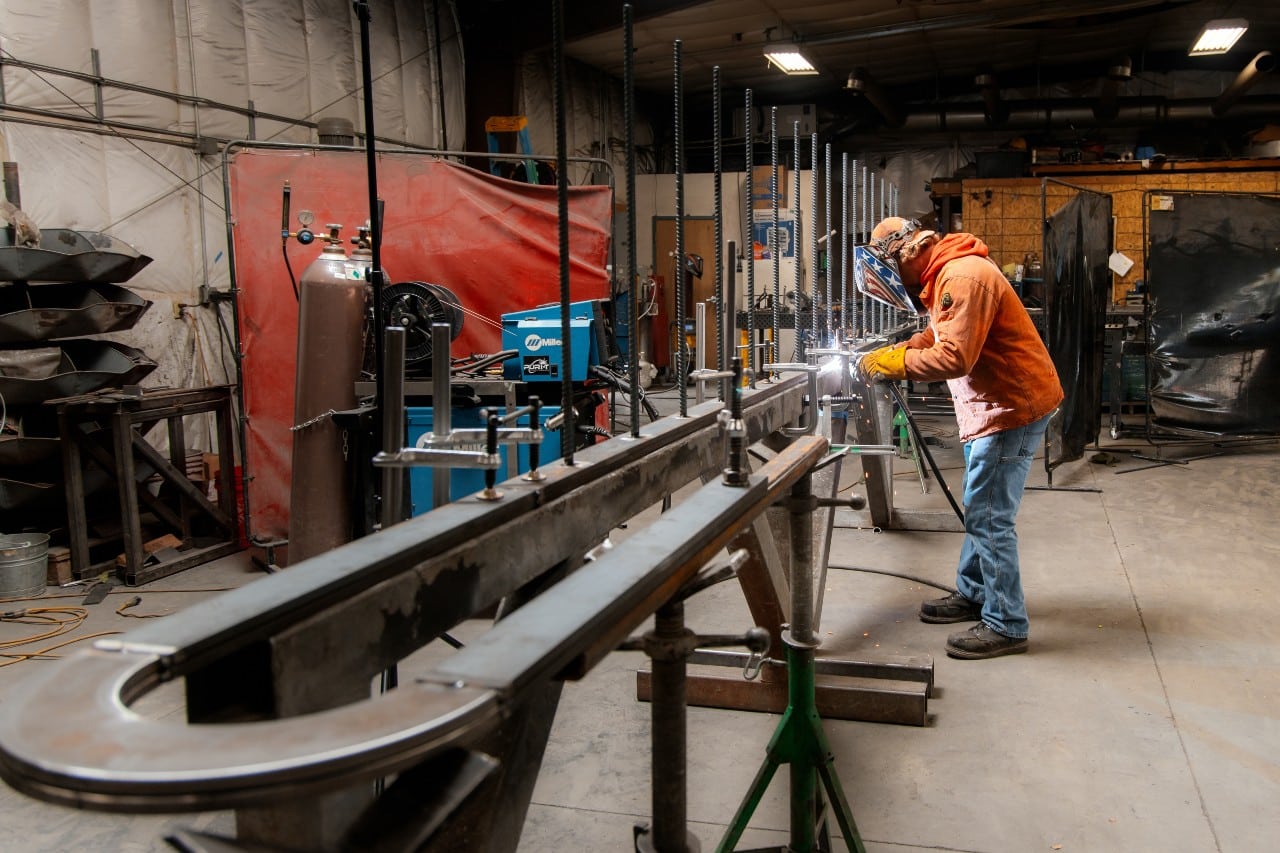
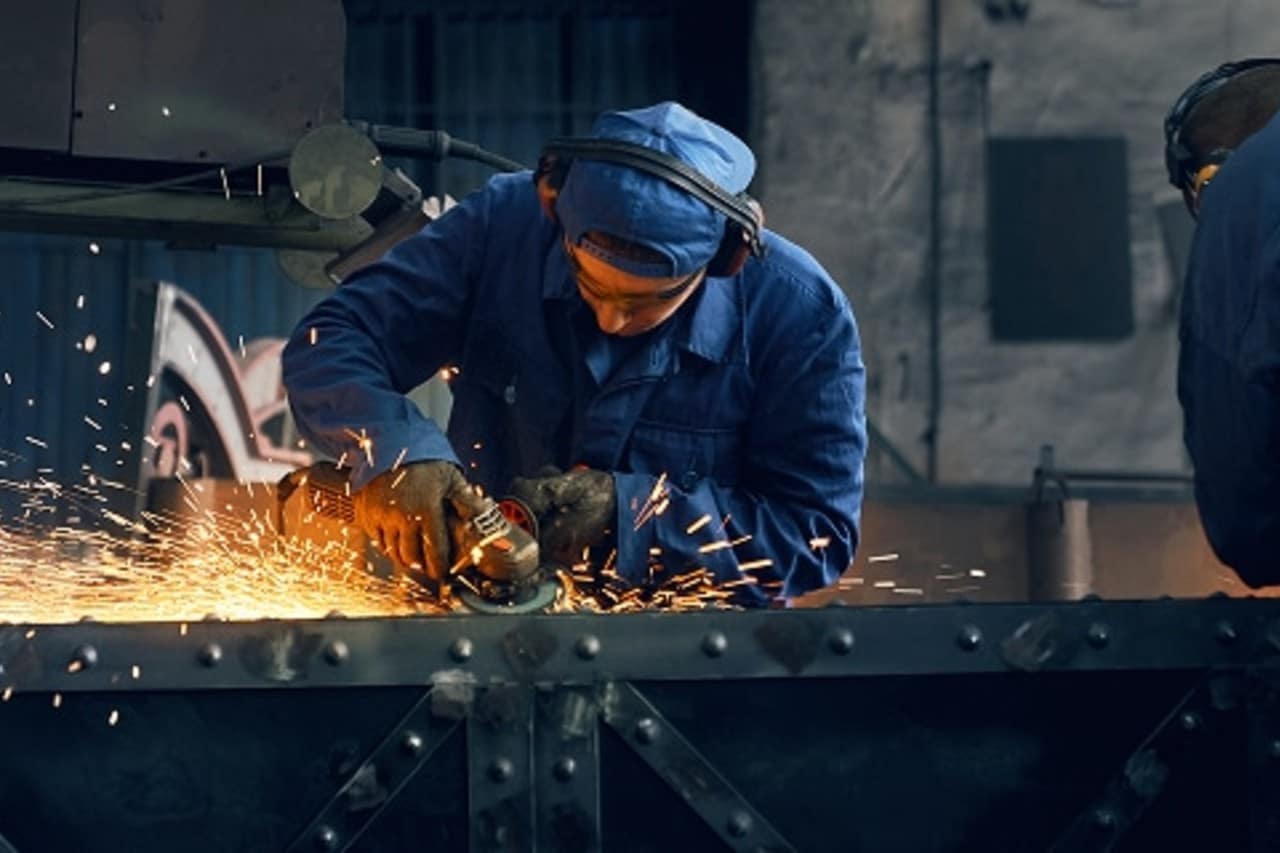
Even the best structural steel can only perform as well as the fabrication behind it. Precision work is what allows steel components to fit, align, and carry loads the way engineers intend.
When cuts are accurate and welds are clean, crews install faster, inspections move smoothly, and the finished structure stays stable for decades.
Precision Determines Performance
Structural steel relies on tight tolerances. Small deviations can create big issues on the jobsite. Accurate cuts, proper bevels, and certified welding directly influence how well a building handles weight, vibration, and daily use.
When components arrive ready to install, crews avoid field modifications. The reduce delayy while maintaining the structural integrity of the design.
Fabrication Standards Protect Long-Term Value
Poorly fabricated steel introduces problems early and often: misaligned beams, weak connections, premature corrosion, and unnecessary maintenance. These issues compound over a building’s lifetime.
Working with an experienced fabrication team ensures every piece meets industry standards, supports the intended load path, and holds up under harsh conditions. Quality fabrication safeguards both the structure and the investment behind it.
Why Choose Puri-T Welding & Fabrication

Structural steel only performs as well as the team that fabricates it, and Puri-T Welding & Fabrication brings the precision, reliability, and technical skill builders depend on.
We partner with contractors, developers, farmers, and property owners who need steel components that arrive accurate, consistent, and ready for installation. The fewer adjustments required on-site, the smoother the entire project runs.
Our shop is equipped for custom structural steel work, from beams and columns to platforms, stairs, and support assemblies. Every piece is crafted with tight tolerances, certified welding, and attention to detail that keeps projects on schedule and buildings performing long-term. No matter the scale or complexity, we build steel to match your exact design and load requirements.
What Puri-T delivers:
- Precision cutting, forming, and certified welding
- Custom-built structural steel matched to your plans
- Durable components designed for long-term performance
- Experienced fabricators familiar with commercial, industrial, and agricultural needs
- Reliable turnaround times that help keep schedules on track
Building Stronger Projects Starts With the Right Material
Structural steel continues to rise in popularity because it performs where it matters most: strength, speed, longevity, and adaptability.
Looking for dependable, high-quality structural steel for your next project? If your next project calls for structural steel built with precision and long-term performance in mind, Puri-T Welding & Fabrication is ready to help.
Reach out to get custom-built components crafted for strength, accuracy, and lasting value. Request a quote today