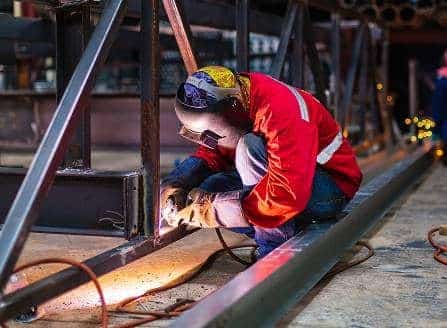
Welding is a group of techniques used to join metal parts, often steel, by applying heat to create a molten pool where the pieces meet. Typically, an electric arc generates the necessary heat, melting the workpieces at the joint. As the metal cools and solidifies, it forms a strong bond between the parts.
The most common welding methods we employ include:
• MIG (Metal Inert Gas) Welding: Ideal for production work on steel, aluminum, and stainless steelwith excellent speed and versatility
• TIG (Tungsten Inert Gas) Welding: Provides precise control for
high-quality, clean welds on variousmetals, especially for thinner materials
• Stick Welding (SMAW): Versatile for outdoor and field work, effective on dirty or rusty materials
• Flux-Cored Arc Welding: Excellent for thick materials and outdoor applications with high deposition rates
• Resistance Welding: Used for specific applications requiring spot or seam welds
Our certified welders select the appropriate method based on material, position, environmental conditions, and project requirements.
With over a decade of experience, our team has developed extensive expertise in blueprint interpretation across various industries. We can:
• Decode complex structural drawings and specifications
• Translate 2D drawings into 3D fabrication plans
• Identify critical dimensions and tolerances
• Recognize welding symbols and specifications
• Interface with engineers to resolve any discrepancies
• Develop shop drawings based on architectural plans
• Work with both imperial and metric measurements
This expertise ensures precise fabrication that aligns perfectly with design intent and structural requirements.
We primarily work with metal and steel, including various grades and specifications such as:
• Structural steel (A36, A572, A992)
• Stainless steel (304, 316, 316L)
• Aluminum (5052, 6061, 7075)
• Special alloys as required by project specifications
• Galvanized and coated materials
Our expertise extends to selecting the appropriate material for each application based on structural requirements, environmental conditions, and project specifications.
We maintain exceptional quality through a comprehensive approach:
• Employing only certified welders with regular skill assessments
• Utilizing advanced equipment with calibration protocols
• Implementing detailed quality control procedures
• Conducting visual inspections on all welds
• Performing non-destructive testing when required
• Following strict WPS (Welding Procedure Specifications)
• Maintaining material traceability throughout fabrication
• Conducting regular training and skill development
• Third-party inspections for critical structural applications
Our quality control process ensures that every weld meets or exceeds industry standards and project specifications.
Safety is paramount in all our operations. Our comprehensive safety protocols include:
• Proper personal protective equipment (welding helmets, flame-resistant clothing, gloves)
• Ventilation systems to remove welding fumes and gases
• Fire prevention measures and extinguishing equipment
• Regular equipment inspection and maintenance
• Comprehensive employee training and certification
• Compliance with OSHA regulations and industry standards
• Job hazard analysis before beginning new projects
• Regular safety meetings and continuous education
These protocols protect our team, your property, and the integrity of every project we undertake. Safety isn’t just a procedure—it’s a core value that influences every aspect of our operation.